Tuesday, 31 March 2026

The Best Of All Possible Worlds


In my town outside a sign maker's shop there is a sign with a picture of Jesus with sacred heart rays signifying His boundless mercies and the words, "Jesus I Trust in You!".  I strongly affirm this statement, but doubt that the meaning I ascribe to those words are the same as that of the business owner.  Taken that the owner has also posted anti-abortion religious sentiment signs, I would imagine that their understanding of this phrase would follow a more conservative Christian narrative.  That understanding would have Jesus as a literal deity that takes personal interest in that person's life and directs and intervenes in their life events through supernatural means.  In this narrative, Jesus has a plan for the "perfection" and growth of each Christian and life events have been carefully orchestrated by Him to that end.  What seems like hardship or tragedy has a purpose in our development or the development of others as part of a plan that may be opaque to us but will lead to the best of all possible ends if only we will, "trust in Him".

I was also reminded of this philosophy by a humorous animation entitled "God sending you a toxic person for character development"  In the clip, God tells his angels to "send him another toxic one" and argues that "I know what I'm doing..this is for character development..send the toxic bitch".  Many who take this view literally see all the tragedy and misfortune in the world as "part of God's plan", and part of the best of all possible worlds that God created and maintains.

The phrase, "the best of all possible worlds" comes from the German philosopher Gottfried Wilhelm Leibniz.  Leibniz argued that, since God is perfectly good and all powerful, then God must have chosen to create the best possible world and what appears to be evil or suffering must ultimately serve a greater good.  This belief was popular among Enlightenment-era rationalists.  However, the philosopher Voltaire found the position both morally offensive and intellectually dishonest.  He felt that in light of real-world suffering such as war, disease, and natural disasters, such an excuse was cruel comfort.  He wrote a scathing satire to parody this philosophy with his novel, "Candide".

On the surface "Candide" looks like a simple adventure story, but it is really a systematic parody of philosophical optimism, especially the idea that we live in “the best of all possible worlds.”.  This philosophy is the often repeated instruction of Candide's tutor, Dr. Panglos with the humour being that he repeats this phrase, insisting that everything is the best, in the worst of circumstances; being hanged and later surviving with syphilis, witnessing wars, massacres, rapes, and executions, along with standing amid earthquakes and public burnings.  He never changes his beliefs, no matter how much evidence contradicts them.  By this Voltaire parodies how philosophy and theology, when they become abstract systems and certainties divorced from experience, can become cruel in the face of human suffering. The protagonist, Candide who is eager to believe in Pangloss's teachings is also exposed in the novel to a series of disasters; brutal military violence, religious hypocrisy and persecution, slavery, natural catastrophe, betrayal, loss, poverty and exploitation, with each episode comically presented in it's extremity, emphasizing the absurdity and indefensibleness of this ideology.

Voltaire concludes his novel with his counter to this doctrine, the phrase, "We must cultivate our garden".  This is his rejection of the urge to explain away injustice as "necessary", of the comfort that things are fine and going according to a divine plan, rather than acting to make them better.  It is a call for engaged and modest human responsibility grounded in reality rather than abstract doctrine.

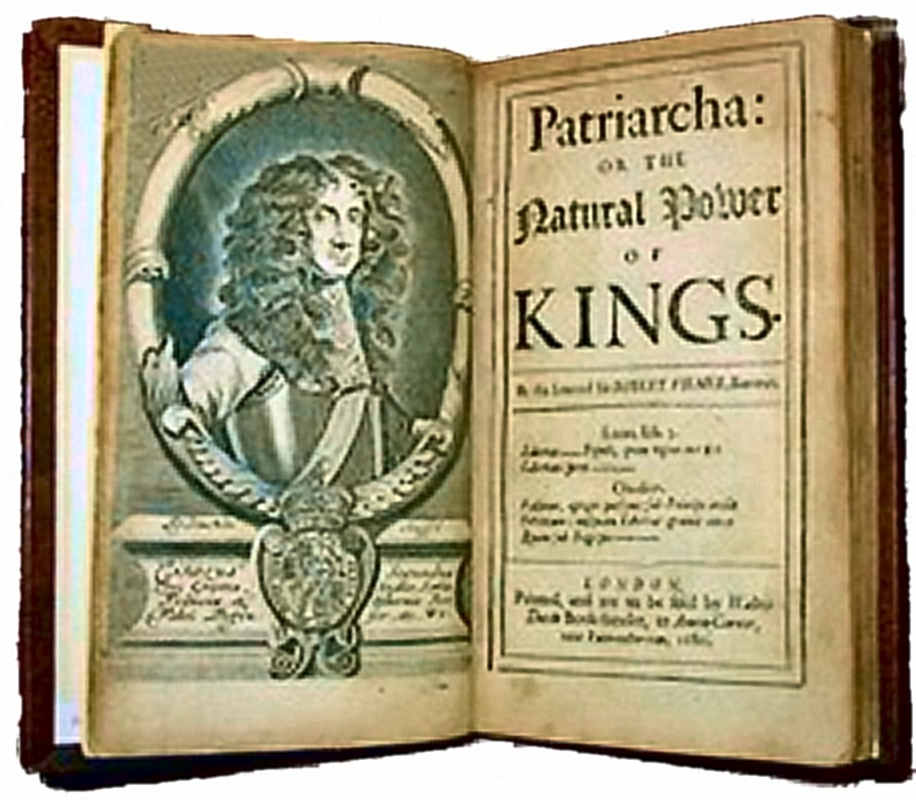
I should also note that the "best of all possible worlds" reasoning goes hand in glove with the "divine right of kings".  According to that doctrine, If all that happens is only what is directed or allowed by God, then whoever has political power must have been installed by God and therefore represents His authority.  The actions by this king must have been foretold and desirable by God and should then be legitimate.  By this thinking, to resist or rebel against the king is to rebel against God.  Many American evangelicals extend this doctrine to Donald Trump, stating that he has been put into power by God and that his actions are God's will.

When I was younger, I was a follower of this philosophy, in the form that, if God was both good and in control of all things, then everything he allows to occur must serve a greater good.  I had read a book about praising God in all circumstances which was based on this thinking.  It was not long after reading this book that I saw an opportunity to put it into practice.  As the president of my Highschool ISCF (Interschool Christian Fellowship) I had convinced our staff advisor and the Vice Principle that a reformed "born again" convict and former bank robber should come share his testimony to the students of the school and, to the reinforcement of my belief that this idea had been from God, they agreed and a date for a senior assembly for this man's presentation was arranged.  However, on the day of the assembly, as the chair filled gymnasium also filled with students, the speaker had yet to arrive.  Our ICSF staff advisor called our club members together and asked sarcastically if anyone could tap dance, stating that the Principal had told him that he would not hold the students in the gym waiting on the speaker much longer.  I failed to recognize the stress this put our staff advisor, how he had struck out his neck for this, and how this might effect his career if the assembly had to be cancelled.  Instead, taking a page out of my book on praising God in all circumstances, I led the group in a prayer where I praised God for what was going on and insisting that God had control of the situation and that we should thank him even if we didn't understand what He was doing.  Instead of acknowledging the staff advisors very real concern and fears, I had shamed him for his "lack of faith".  At the very last possible moment, the speaker did arrive before the assembly was excused and the testimony went ahead.  This circumstance justified in my eyes my "faith" in this understanding of God  and in my conviction to adhere to this theology in the future despite reality and any evidence to the contrary.

Today, I affirm the statement "Jesus I Trust in You" quite differently, but no less emphatically. First century Rabbis like Jesus were synonymous with their teachings.  I similarly see Jesus the person as inseparable from his teachings and recognize that in the Gospels the story given of his life epitomizes his 'Way'.  So, for me, saying that I trust in Jesus means that I trust in the Way, the teachings of Jesus.  This is what I put my trust in; a perspective of the world where what is paramount or "divinely sanctioned" is love of one's enemies, radical inclusion, non-violence, and a compassion that leads to active service such as the feeding of the hungry, visiting those sick and in prison, and welcoming the stranger.  This perspective, instead of passively accepting injustice and suffering as part of God's will, calls us to do what we can to correct injustice and alleviate suffering.  Like Candide's conclusion, it calls us to, "cultivate our garden", to take responsibility and engage with the world in light of an alignment and allegiance to what Jesus demonstrated was important and had the highest legitimacy; love, compassion, inclusion, and truth, among other things.  In a world that seems to be dominated and led by greed, self interest, and lack of compassion and concern for the other, raising this standard may seem like raising a flag in a hurricane. Yet, even if the rest of the world rejects it and I convince not a soul to it's merits, or end up benefiting none of those I hoped to help, I believe this faith to have merit on it's own and to be worth any and all cost.


Wednesday, 15 June 2016

Who's Going to Hell?

We have all heard pronouncements of condemnation by conservative and Religious Right Christians announcing God's judgement of an eternity in Hell on persons and minority groups whose "lifestyle" they don't agree with.  This is usually based on a cherry-picking of Old Testament Law that corresponds with their own cultural biases and used in the service of prejudice and bigotry to villify, exclude, and persecute those who don't fit the cultural and social norms of their religious denomination, sect, or movement.  I would like to take some time to explore why this is a gross misrepresentation of the "Way of Christ" given in the teachings and stories of Jesus in the Gospels.  Once I have covered this, I would then like to look at what the Gospels would tell us if we did take the metaphor of Hell literally.  What if Jesus is actually going to send some people to Hell?  If it were true that Jesus is indeed literally going to pass judgement on each of us in the next life, then, given what and who he condemns in the Gospels, who would he send to eternal punishment and suffering?

Unfortunately, the history of Christianity beginning with the Holy Roman Empire founded by Constantine is rife with the use of the literalization of Hell by those in power to control and in many cases oppress.  Both Church Authority and Christian States have used the threat of damnation to enforce compliance to their rule.  


Christian Monarchs of Europe and Britain followed the precedent of the Holy Roman Empire and reinterpreted Christianity as an ideology to reinforce their legitimacy and political control.  This is best seen in the doctrine of, "the Divine Right of Kings".  This creed held that those in power have Divine sanction and to question or oppose them is to question or oppose God Himself.  The reasoning was that if God controls and directs the activity of man, then anyone who comes to power must have been put there at the will of God and have His authority.  So, anyone who defied or questioned those in political authority were defying God and could be threatened with punishment not only in this life, but also with eternal punishment in the next.  Christianity became in many cases a gospel of control and oppression rather than transformation and life


However, the literal Hell narrative is not the point of the writings of the New Testament. I would argue that this narrative takes the scriptural texts out of context and is not faithful to the intent of the authors.  A literal interpretation points to an actual afterlife where one's identity and memories live on without a body, where one is sent to either one of two regions, one of bliss, or one of torture, depending on one's moral behaviour. This is figurative language used to discuss what is legitimate and laudable and brings "life" as opposed to what is destructive and brings a kind of "death".  Actions stemming from love, compassion, and inclusion create a circle of life where further actions in the same vein are encouraged to grow, a wholeness that continues on even after the individual is gone.  The same is true of the vicious cycle that can be produced by actions of selfishness, hatred, and exclusion.  It is these cycles of "good"or "evil" that create patterns of behavior that continue on after the individuals are gone that are a kind of afterlife, one that can be a heaven, or a hell.


So, what about all those references in the Gospels to an afterlife, you might ask.  To begin with, you have to remember that Jesus was a Jewish Rabbi and wisdom teacher who belonged to post-exilic Rabbinical Judaism.  He and his early followers saw themselves as thoroughly part of that religion and tradition.  Wisdom teachers in that tradition frequently used the telling of popular stories, parables, and myths with their own twist in order to make a point, or bring a different perspective to light.

Epic of Gilgamesh
One of the best examples of this from the Tanakh, the Hebrew Scriptures, is the story of Noah, which is a retelling of the story of the Sumerian Epic of Gilgamesh, fragments of which have been found on tablets dated around 2,000 B.C., and which was also retold by the Akkadians, Babylonians, and Assyrians.  This story was never meant to portray a factual account of some literal historic event.  Its importance is in the way it was retold and interpreted by the Hebrew people.  

http://www.skeptic.com/reading_room/flood-myths-who-believes-in-noahs-ark-and-why/
Secondly, one needs to be aware that an afterlife was not a theme in the Rabbinical Jewish tradition that Jesus and his followers belonged to.  After death was only sheol, the grave.  The Hebrew tradition and the Tanakh is all about the people's Covenant and relationship with God in life.  I can only imagine that they steered clear of any suggestion of an afterlife in reaction to the prominent place the idea held in the religion of their oppressors in Egypt.  As a result, the closest thing to an afterlife in the Tanakh is where Elijah is taken up to heaven in a whirlwind.  However, he didn't experience a life beyond death, he just didn't die.

There are only two references in the Old Testament that could be said to refer to an afterlife and these are Persian influenced references to a resurrection in some future time rather than an immediate transition to another conscious reality at the point of death. The first is: “Thy dead shall live, my dead bodies shall arise, awake and sing, ye that dwell in the dust, for thy dew is as the dew of light, and the earth shall bring to life the shades” (Isaiah 26:19); and the second: “And many of them that sleep in the dust of the earth shall awake, some to everlasting life, and some to reproaches and everlasting abhorrence” (Daniel 12:2).

Outside of the Rabbinic Literature, there is a doctrine in Jewish eschatology of Resurrection, where in a future age the dead will rise from their graves to live again.  This idea was closely associated with the doctrine of the Messiah and would be a ready store of allusions for the Gospel writers who cast Jesus in the Messiah role.


Stories and myths about an afterlife in Jesus time, mainly came from other religions and traditions; the Egyptian stories of the Field of Reeds where the soul went to enjoy a continued existence without sickness or disappointment for eternity, or the Greek myths of Hades where there were different planes of existence the dead could inhabit depending on how they had lived their life on earth.  The Roman city of Sepphoris, the capital of the Galilee province, was a hotbed of Hellenistic culture.  This city was only five kilometers away from Nazareth.  Jesus and his audience would have been quite familiar with the Greek stories about an afterlife.

Like the good Jewish wisdom teacher he was, Jesus used the popular stories, myths and ideas his audience was familiar with, giving them his own twist to illustrate his ideas and perception of reality. The writers of the Gospels did the same thing using allusions to these stories in their metaphorized accounts of Jesus' life and actions.  Marcus Borg in his writing uses the example of the parable of the prodigal son to demonstrate how a story in Scripture does not have to be literal in order to illustrate truths.  No one would say that because the family in the parable were not literal historical figures and that the narrative told is not a recording of actual historical events that the point it was meant to illuminate is not "true".  Many Christians, however, do not seem able to accept metaphor and allegory in the Scriptures where the text is not clearly identified as being a parable.

So what references to these stories from other cultures and religions about an afterlife were made in the Gospels?  There is the example of Jesus' parable of the rich man and Lazarus in the Gospel of Luke.  In this parable, the rich man and Lazarus both die and experience an afterlife where they are judged and sent to different planes of existence dependent on how they had lived their life on earth like in the Greek myths of Hades.  This is obviously a parable and shows up in Luke among a collection of parables.  It doesn't make sense to interpret it as Jesus giving a science lesson on the actual workings of what happens when people die.  The point being illustrated is that wealth and luxury are not rewards from God to the righteous and that failure to look after the poor and suffering is worthy of punishment (or, at least, that's how I interpret it).


Part of the narrative of a non-figurative Hell includes the characterization of Jesus as having come as judge, to mete out punishment to the many, and provide salvation to the few.  In this theology, after a person has died and their personality and memories have passed into an alternate reality not observable by our own, Jesus is portrayed as sitting in judgment over the person on which level of Hades they will reside, or to decide if that person merits the Field of Reeds, Heaven.  

In modern conservative Evangelical Christianity, the deciding factor is what you have allowed yourself to be convinced is factual.  The first condition is that you be convinced intellectually that there is a literal God, an all powerful sentient being that can read your mind and presides over the alternate dimension experienced at death.  Secondly, you must be convinced that the legal system of this narrative is also true and just, and that you have transgressed against it and are deserving of punishment.  And thirdly, you must be remorseful about this transgression and wish to be pardoned.  One can then gain forgiveness by asking that Jesus' death be accepted as payment on your behalf.  However, one must refrain from a, "lifestyle", that is out of compliance with those Old Testament laws that whichever Christian denomination or sect you have joined have determined God still endorses as opposed to the others.  This is a somewhat convoluted theology which may be a helpful model for some people.  However, it is not reflective of the themes of judgment and salvation in the Gospels.


Judaism of the second Temple period thought of Salvation in more of a corporate than personal fashion.  The concept of Salvation was tied to the restoration of the state of Israel and rescue from national enemies.  This was especially relevant in Jesus' time with the conquest and occupation by Roman forces. The Jews of the first century expected to be rescued from foreign dominion. Looking to texts such Deuteronomy 4:32, Isaiah 40:1-2, and Jeremiah 31:27-40,  many believed that this would only occur after they suffered a purification process for past breaches of their covenant with God.  As such, they looked for an immediate earthly wrath and judgment by God on the people of Israel where, as John the Baptist put it, "every tree that does not produce good fruit will be cut down and thrown into the fire" (Luke 3:9).  This was an earthly process for the living and had nothing to do with one's existence after death.  In the Gospels, John the Baptist identifies Jesus as the awaited Messiah that would carry out this process on God's behalf.

"But one who is more powerful than I will come...His winnowing fork is in his hand to clear his threshing floor and to gather the wheat into his barn, but he will burn up the chaff with unquenchable fire.” (Luke 3:15-18)

The people asked John what they should do (to be saved from this immediate earthly purification).  His answer did not involve any of the Evangelical narrative above.  He told them that, "Anyone who has two shirts should share with the one who has none, and anyone who has food should do the same".  To the tax collectors he instructed that they not, "collect any more than you are required to".  To the soldiers he advised, "Don't extort money and don't accuse people falsely". 


So, the, "Good News of Salvation", in this section of the Gospels, is that there is a way for the people of Israel to escape the coming earthly judgment and purification necessary before their salvation from foreign domination.  The key to this salvation is through practicing generosity, social equality, honesty and justice.


Now, let us turn to the subject of the title of this blog.  Given the teachings of Jesus and the stories about him in the Gospels, who would he, "send to Hell", or, more accurately, what behaviours did he view as meriting punishment?  To begin with, this would include those actions that are the opposite of those John the Baptist cited to the people as the path to save themselves from the Messiah's earthly purge: greed, such as not sharing ones wealth with those in need to the level of equality, corruption, such as using position to extort or take advantage of others, and dishonesty, such as giving false testimony.  

Jesus is given in the Gospels as affirming John's route to escaping the Messiah's judgment and as confirming his displeasure with those who do not follow this direction. One of my favorite sections from the Gospels comes from the 21st chapter of Matthew where, in response to the Chief Priests and Elders questioning of his authority, he tells them a parable about two sons. At the request of their father to work in the vineyard, one son says he will not go, but changes his mind and later does, while the other initially says he will go, but in the end does not. When the Chief Priests and Elders identify the first as doing what his father wanted, Jesus responds with one of my favorite verses, “Truly I tell you, the tax collectors and the prostitutes are entering the kingdom of God ahead of you. For John came to you to show you the way of righteousness, and you did not believe him, but the tax collectors and the prostitutes did.“ 

Next, let us look at the parable that is given in the sixteenth chapter of the Gospel of Luke about the Rich Man and Lazarus.  As mentioned earlier, this is one of texts that literalists draw their narrative on Hell from.  However, it is obviously a parable using the Greek myth of Hades as a vehicle and is placed in the chapter between other stories told by Jesus that no one questions as being parable. 

In the parable, both a rich man, who lived in luxury every day, and the beggar Lazarus, who lived at his gate, die, are judged, and sent to different planes of existence dependent on how they had lived their life on earth like in the Greek myths of Hades.  The place where the rich man ends up is actually called Hades, ᾍδης, ου, ὁ, in the original Greek texts of the Gospel, the same word used in the original Greek myths.  Jesus does however give a Hebrew twist to the story by having Father Abraham the one in charge in the next realm.

Now, in the story, the rich man isn't so much presented as being punished for his greed and lack of humanity in not sharing his wealth with Lazarus, as much as being subject to a kind of cosmic Karma.  When the rich man asks Father Abraham for pity and relief from his torment he is told:
But Abraham replied, ‘Son, remember that in your lifetime you received your good things, while Lazarus received bad things, but now he is comforted here and you are in agony." (Luke 16:25)
So it appears that Jesus is proposing that if you live in inequality where you reserve the good things in life for yourself, not sharing them equally with others, you will at some point experience bad things in proportion so that there is a balance.  Not quite the message we are used to in the popular representation of Jesus and his teaching.  However, the theme is quite a common one in Greek Myth and Tragedy.  In these stories, rising too high risks gaining the notice of the gods and being knocked off one's perch like Oedipus.  In this case, Jesus would seem to be condemning inequality and hoarding resources to live in luxury while others live in deprivation.


Aside from social inequality, the thing Jesus is least tolerant of in the Gospels is self righteous legalism.  He condems those who consider themselves to be better or set apart from others due to strict observance of moral and Religious laws and who believe by their adherence to the letter of these laws that they have reached the limits of what God, compassion and empathy, requires of them and can demand blessing and reward in return.  This way of thinking was exemplified in Jesus time by the Jewish sect of the Pharisees.  Jesus was in no way shy in his insults towards this group for this mindset and the actions it produces.
43 “Woe to you Pharisees, because you love the most important seats in the synagogues and respectful greetings in the marketplaces.44 “Woe to you, because you are like unmarked graves, which people walk over without knowing it.”45 One of the experts in the law answered him, “Teacher, when you say these things, you insult us also.” (Luke 11:43-45 NIV)
27 “Woe to you, teachers of the law and Pharisees, you hypocrites! You are like whitewashed tombs, which look beautiful on the outside but on the inside are full of the bones of the dead and everything unclean. 28 In the same way, on the outside you appear to people as righteous but on the inside you are full of hypocrisy and wickedness. (Matthew 23:27-28 NIV)
“Woe to you, teachers of the law and Pharisees, you hypocrites! You shut the door of the kingdom of heaven in people’s faces. You yourselves do not enter, nor will you let those enter who are trying to. (Matthew 23:13 NIV)
All this condemnation aside, who might be worthy of punishment is not the point of the Gospels.  The principle aspect of Jesus' teaching is his portrayal of God, what is legitimate, as primarily compassionate, generous, merciful, and inclusive, and that we are called to emulate this nature.  The main issue Jesus has with the Religious Leaders and Authorities is that they claim to represent God while not demonstrating these qualities and for excluding others in God's name.

So, given all this, who would Jesus, "send to Hell", or see as first in line in deserving of punishment?  Ironically, it would be those of us who censure and exclude others and pronounce them as condemned to Hell for not following Religious Law, or not following it to the same degree as ourselves.  The, "kingdom of heaven", is manifest whenever we live under the authority of God, the authority of love, compassion, and mercy, and no one is excluded, not even legalists and pharisees. 


Tuesday, 24 May 2016

How Jesus Taught Us To Observe God's Law

I have another blog series called, A Literary Look at the Gospels, where I am working my way through the Gospels passage by passage in an effort to better understand what these teachings and stories meant to the authors and their faith communities.  In the course of this study I have been quite excited by the themes of acceptance and inclusion I have been discovering in the second chapter of Mark.  The other thing I have found quite enlightening there is the Gospel's presentation of Jesus' teaching on how to observe Torah, Old Testament law.  I believe that this teaching has a lot to say to modern Christians on how to faithfully approach laws written in the Old Testament.  It also speaks to their relevance to both our own Christian practice and how, in regard to these laws, we view and treat others, so much so that I felt it deserved some additional discussion on its own outside of that study series.
Jesus, as presented in the Gospels, was not one for imposing rules and regulations. He stated that all the Commandments and the Law could be fulfilled through the commandments to love God and to love our neighbour. The only addition he is given as adding is to love others as he has loved us. This would seem to be a pretty clear direction, but Christianity has still struggled over the years with how to approach the holiness and purity regulations found in the Old Testament. 


Some, laws like the dietary regulations, have been clearly negated in the New Testament. Faithful Jews to this day honour the ban on eating pork and shellfish, but I do not know of any Christian groups who believe they should do likewise. In the tenth chapter of Acts, Peter has a vision were God presents him with a variety of animals and reptiles restricted by the purity laws and commands him to kill and eat. When Peter balks at breaking the law and eating that which it identifies as unclean, God replies, “Do not call anything impure that God has made clean.” (Acts 10:15 NIV) Later in the chapter, Peter interprets this vision as extending beyond food to people. He is asked to go to the home of Cornelius, a Gentile. While there, he tells the crowd that has gathered outside, “You are well aware that it is against our law for a Jew to associate with or visit a Gentile. But God has shown me that I should not call anyone impure or unclean." (Acts 10:28 NIV).

The letters of Paul included in the New Testament were written at a time when there was much debate in the early Christian community around what laws they had to follow.  Did Gentile members need to be circumcised as required by the law?  Could people eat meat that had been sacrificed to idols before going on sale at the marketplace?


Paul, who was formerly a Pharisee and a strict legalist, responded to these issues with the position that these laws were part of the Old Covenant, the old agreement with God.  Jesus had fulfilled and completed our requirements under this old contract making them null and void.   The Old Covenant of law is replaced with a New Covenant of grace and faith.  In fact, he criticized those in the Christian movement who, by continuing to call for strict adherence to the purity laws, were rejecting the freedom of Christ to remain "slaves to the law".  I've included a few of Paul's statements to this effect below

Therefore, there is now no condemnation for those who are in Christ Jesus, 2 because through Christ Jesus the law of the Spirit who gives life has set you free from the law of sin and death. 3 For what the law was powerless to do because it was weakened by the flesh, God did by sending his own Son in the likeness of sinful flesh to be a sin offering.  And so he condemned sin in the flesh, 4 in order that the righteous requirement of the law might be fully met in us, who do not live according to the flesh but according to the Spirit. (Romans 8:1NIV)
For Christ is the end of the law for righteousness to every one that believeth. (Romans 10:4 KJV) 
All things are lawful for me, but all things are not expedient: all things are lawful for me, but all things edify not. (1 Corinth. 10:23 KJV) 
For freedom Christ has set us free. Stand firm, therefore, and do not submit again to a yoke of slavery. (Galatians 5:1)

Returning to the Gospels, Jesus is presented as breaking the purity laws, or the Rabbinical strictures on how to observe these laws, at various points: he heals and works on the Sabbath, he touches lepers, he and his disciples are criticized for not following the proper washing practices before meals, and at one point he negates the dietary laws by telling his disciples to eat anything put before them without question while a guest in someone's home on their travels to spread his message.

However, the Gospels also relate a statement by Jesus that seems to contradict both Paul's theology and Jesus' actions listed above.  In the fifth chapter of the Gospel of Matthew, Jesus is presented as stating that the law will remain in effect until heaven and earth pass away.
17 “Do not think that I have come to abolish the Law or the Prophets; I have not come to abolish them but to fulfill them. 18 For truly I tell you, until heaven and earth disappear, not the smallest letter, not the least stroke of a pen, will by any means disappear from the Law until everything is accomplished. 19 Therefore anyone who sets aside one of the least of these commands and teaches others accordingly will be called least in the kingdom of heaven, but whoever practices and teaches these commands will be called great in the kingdom of heaven.20 For I tell you that unless your righteousness surpasses that of the Pharisees and the teachers of the law, you will certainly not enter the kingdom of heaven. (Matthew 5:17-20 NIV)

Given this, modern Christianity displays a wide range of attitudes on how to be faithful to the legal tradition of Torah. Some Christians, taking their queue from Paul, see all Old Testament law as void, something that no longer bears any relevance to Christian practice.  Others see the law as a source of general guidance, but not something we are strictly bound to.  At the other end of the spectrum are Christians who contend that all Old Testament laws are still in play with the exception of those, like the dietary regulations, which were explicitly exempted in the New Testament.  For them, the transgression of any of these laws requires either absolution by a Priest (if one is of the Catholic persuasion), or a heartfelt request for forgiveness to God calling on Jesus blood and sacrifice as payment for their sin and accompanied by a promise to no longer engage in the sinful practice or lifestyle.

Another take, more in the middle and popular among many Christian denominations and groups, is where most of the law is considered void with the exception of those which religious authority has deemed still reflective of God's will.  The authority who sets this distinction may be the traditions of their denomination or cultural group, or may be current church or religious leaders.  Invariably, the laws chosen as still in effect are reflective of the group's own cultural bias and prejudices.  Laws such as the ban on trimming the sides of one's beard, wearing clothing woven from more than one material, or planting more than one kind of seed in one's field do not make the list.  Likewise with the restriction on loaning money at interest and the requirement to take anyone who becomes destitute into your home and providing for their needs, or the commandment not to be prejudiced against foreigners or refugees.


To make things somewhat confusing, these various groups and denominations look to different authorities for the determination of which laws are still in effect and so hold different views on which ones when broken constitute a sin.  A recent example would be the case of a county clerk in Kentucky who gained some notoriety by refusing to issue marriage licenses to same sex couples in defiance of Federal law because her religious community felt that it was against, "God's law".  What is particularly relevant here is that, while many Christians, including Christian leaders and politicians belonging to groups with similar views, held rallies outside her workplace to support her, one unexpected group came to protest against her.  Members of the Westboro Baptist Church came to the rallies with signs to condemn her as an unrepentant adulteress and tell the world she was going to hell.  This woman had divorced and remarried and so the man she was living with, in their eyes, was not her husband according to God's law.  In fact, the woman had divorced and remarried a number of times and had conceived a child with one future husband before she had divorced her then current one.  That, to the Westboro Baptists, could be forgiven, but to continue in a lifestyle of unrepentant adultery by living with a man who was not the first she said vows with was not.

The concept of following religious authority to dictate how to observe religious law and Jesus' alternative is the topic that I find addressed in the passage from the second chapter of Mark that I talked about in the opening.  Much of my observations stem from a study of Mark 2:23-28 in my blog, Lord of the Sabbath.

This passage follows a number of stories where Jesus is shown in conflict and disagreement with the Pharisees.  The stories are used to contrast the way, the teaching, of the Pharisees with the new way of Jesus.  To understand the difference being presented we need to understand something of the Pharisees.

The Pharisees were the dominant sect in Judaism in the time of Jesus.  Judaism is primarily concerned with the Covenant with God and upholding this covenant through the observance of Torah.  The Pharisees were particularly zealous in following Torah to the letter.  They created numerous regulations and requirements on how to put Torah into practice.  Much of this legalism was based on the Mishnah, a redaction of the oral traditions of the Pharisees from the Second Temple period (536 BCE – 70 CE). The Mishnah is comprised of examples of Rabbinical judgments that were used to determine the correct way to carry out laws recorded in the Torah.  Each Rabbi would teach both the collected regulations, the "yoke", of his teacher and the line of teachers before him, as well as his own leading to an ever increasing body of rules to clarify and break down in ever increasing levels of minutiae the proper observance of Torah. These regulations set standards on what it meant to follow laws like the command to rest on the Sabbath. They defined for the observant Jew what should be considered "work" and therefore restricted on the Sabbath, what constituted the beginning and end of the Sabbath when these restrictions applied, and what exemptions were allowed. 


The reasoning behind this zeal was noble and stemmed from a desire to make Isreal great by ensuring that the people upheld their part of the Covenant.  This would have been particularly important at the time when the Gospel of Mark was written which scholars date as being close to the occupation by Rome and the destruction of the Temple. 

Judaic thought of the time, as represented by the Pharisees, was one of a community of exclusive holiness. Only by the people becoming more holy, purging themselves of the unclean, and fulfilling their side of the covenant through strict adherence to the law, would God fulfil his side and drive out their oppressors and make them a nation again. This could only be accomplished through increased zeal in meeting the letter of the law, for the purity and holiness regulations and rituals as a community. This mindset demanded the exclusion and censuring of those who did not, or could not, meet these practices to the level demanded. We see this in the Gospel stories through the exclusion and condemnation of the disabled, the ill, and those not tithing or meeting the purity practices and rituals, exactly the people the Gospel stories show Jesus reaching out to and making a point of including.

A theology similar to that of the Pharisees exists among some modern Christian groups and religious leaders, particularly in the United States.  Many see their country as inheriting the Old Covenant between Israel and God.  They interpret economic downturn and tragedies such as natural disasters and 9/11 as the withdrawal of God's favour due to what they see as the moral decline of the nation.  The way to make their country, "great again", is to enforce across the country the purity laws that they subscribe to through exclusion, persecution, and civil laws targeting those who do not practice these laws and against those of other religions.

In an article at Patheos.com, Morgan Guyton describes the disagreement between Jesus and the Pharisees as a difference between consequentialist and deontological ethics. In consequentialist ethics, you decide what to do on the basis of what will cause the most good and least harm.  In deontological ethics, you find an authority figure to give you a duty to obey.  The more unreasonable the duty, the more faithful the observance.

People with deontological ethics only feel assured that they are submitting fully to an authority if they perform duties that make no sense from a consequentialist perspective. The duty must be opaque to be fully deontological. Deontological ethics says that unless I do what makes no sense to me, then my sense is my authority rather than the Bible.
In regards to this difference in ethics in Jesus interaction with the Pharisees, Guyton explains:
For the Pharisees, the Sabbath is an opaque duty. The test of whether you’re honoring the Sabbath or not is whether you avoid doing even virtuous deeds for the sake of honoring God. When Jesus puts the Sabbath in terms of “doing good or doing harm,” he’s making the Sabbath consequentialist rather than deontological. The Pharisees would say that Jesus is offering a false choice. The cessation of work on the Sabbath is a duty. Making the Sabbath pragmatic destroys the deontological authority of the law.
Jesus makes his consequentialist stance explicit when he says, “The Sabbath was made for humanity, not humanity for the Sabbath, and the Son of Man is Lord even of the Sabbath” (Mark 2:27). So to me, respecting Jesus’ lordship as the chief interpreter of scripture means reading it consequentially rather than deontologically. 
http://www.patheos.com/blogs/mercynotsacrifice/2016/05/12/why-were-ethically-incomprehensible-to-each-other/
This perspective also sheds light on some otherwise confusing behaviour by many Christians in the United States that belong to groups that have been labelled "Evangelical" or part of the "Religious Right".  A large component of this group along with many of their leaders have put their support behind the Republican Nominee Donald Trump.  Why would Christians who trumpet "family values" endorse for President a man who has had multiple divorces and boasts about having affairs while married?  Why would they endorse someone who owns casinos and regularly lies about things like donating money to veterans?

One reason may be the authoritarian leadership style of this man which is similar to that of many of their own religious leaders, a style which they have learned to respect and follow.  A PhD student at the University of Massachusetts Amherst named Matthew MacWilliams explored the lure of authoritarianism as a factor in Donald Trump's popularity in his dissertation research.
MacWilliams studies authoritarianism — not actual dictators, but rather a psychological profile of individual voters that is characterized by a desire for order and a fear of outsiders. People who score high in authoritarianism, when they feel threatened, look for strong leaders who promise to take whatever action necessary to protect them from outsiders and prevent the changes they fear.
Trump embodies the classic authoritarian leadership style: simple, powerful, and punitive
http://www.vox.com/2016/3/1/11127424/trump-authoritarianism

Donald Trump capitalizes on people's fears.  He characterizes the "average citizen", the white christian majority, as under attack and provides scapegoats and direct puntive solutions.  Mexicans take our jobs and create crime.  The solution is to build a wall.  Muslims are a terrorist threat.  The solution is to ban Muslims, including Muslim refugees, from entering the U.S.

As an authoritarian he presents himself as someone who is "right" and has firm simple views that will not be influenced by others, do not require further analysis, or consideration, and will not be comprimised by debate or the arguements of others.  This is popular among those who just want someone who will take authority and clearly and simply tell them what they need to do to meet their percieved threats without nuance or the requirement to analyze and weigh the merit of his proposals.   It appeals to those who want someone who will take away from them the responsibility and burden of thought and moral decision.

Unfortunately, these are the characteristics and methods of many of the Christian leaders that many deontological Christians seek as an authority in the practice of Christianity including which religous laws should be in effect and how they should be implemented.  Like Trump, they use fear and scapegoating to build their power.  Christianity, to them, is under attack.  Those who support respect for other cultures and religions are trying to destroy Christianity.  America's economic decline, terrorist attacks and natural disasters, are God removal of his favour and protection because the nation is failing to practice their brand of Christianity and the religious laws that reflect their own culture and prejudices.  Those of other religions and those who fail to follow these laws are to be hated, reviled, excluded, and persecuted.

Like Trump, they are not to be questioned.  Supporting positions that don't bear up to the facts or promote persecution and violence towards others is a sign of faith and trust in the belief that these leaders are chosen and directed by God.  Like the Pharisees, the more obscure and nonsensible the command, the more faith it shows to follow.  If you can accept creationism and an earth that is only 6,000 years old, facts and statistics have no relevence.  This is a recipe for disaster.  As Voltaire is famous for saying, "Those who can make you believe absurdities can make you commit atrocities".

A further analysis of authoritarianism and evangelicalism can be found in the following article.

http://www.patheos.com/blogs/frankschaeffer/2016/04/evangelical-authoritarianism-and-fear-in-america-cruztrump-two-christian-failures-one-authoritarian-ethos/


Jesus did not have an authoritarian leaderhip style.  He also did not give us a list of which laws we should accept or reject.  There were incidents were he acted in defiance of some laws and particularly the way the Pharisees decreed they should be practised, but, as we saw in the passage from the fifth chapter of Matthew, he did not call for the law to be discarded.

He also did not give us regulations or rules prescribing how Christianity should be practiced.  His teaching style was to present stories and parables that showed the world from a different perspective, one where God is seen as primarily loving and compassionate.  He invites the listener to repond to others in terms of this love in one's practice of the law and beyond.  This is true as well in the Gospel stories of Jesus' interaction with others and debate with the Pharisees.  It is more than consequential, what will result in the most good and the least harm.  It is compassionate, based on emulating the love and acceptance of God by all which Jesus characterized.

In not giving us the burden of his own authoritative list of rules and regulations, Jesus gave us what may be a greater burden, responsibility.  We are called on not to shirk the task of moral decision on authority, but to take the risk ourselves of getting it wrong and the responsibility and accountability that goes with it on our own shoulders.  However, he has promised that as Christians we do not shoulder that burden alone.  He has sent us the Holy Spirit, the spirit of God's wisdom, compassion, and love, to help us judge the loving and compassionate way we should practice, or not practice, religious law in each situation.  This, I believe, is Jesus' teaching on the Law we need to emphasise today.


Friday, 13 May 2016

The Deification of Jesus: Matthew Part 1


These series of posts are a non-literalist Christian's exploration of images of Jesus as Divine in Christianity and the New Testament. I am examining where these images came from and the reasons they were created. This is also an investigation of these image's meanings to those who created them and what meaning they may hold for myself and others today.


I began the analysis of images of Jesus in the New Testament with the oldest of the Synoptic Gospels, the book of Mark. Like the other Synoptic Gospels of Matthew and Luke, Jesus is portrayed as considering himself the Messiah, the future King of the Jews of the Messianic Age, but not as Divine, or somehow equal to God. There are, however, descriptions of him able to access special favor with God, and as such God would perform miracles and mighty deeds at his request. There is also mention of special abilities due to his intimacy with God.

In this post I move to the Gospel of Matthew to investigate the images this community used to express who Jesus had become to them and to explore whether any of them portrayed Jesus as in any sense Divine, or more than human.

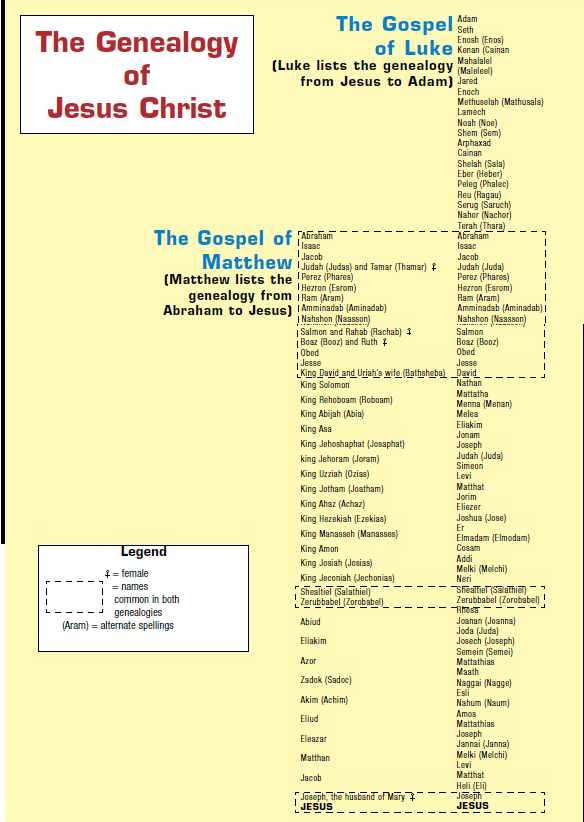
The first chapter begins with, "the genealogy of Jesus the Messiah the son of David, the son of Abraham". Jesus' lineage through Joseph is traced via king David to Abraham. This would seem to be done to validate him both as a true Hebrew and as a candidate for kingship. However, it would seem to be an odd way to claim his lineage if they were taking literally the Divine conception portrayed later in the book. If Joseph is only Jesus', "adoptive", father, then why claim the legitimacy of his heritage through Joseph?
Descent in Judaism at that time was patrilineal and did not change to matrilineal descent until the second century. However, the tradition of adoption, taking another's child as one's own, was not strong, and considering an adopted child as an heir, or part of the lineage even less.
The evidence for adoption in the Bible is so equivocal that some have denied it was practiced in the biblical period.
http://www.jewishvirtuallibrary.org/jsource/judaica/ejud_0002_0001_0_00486.html
Looking at the story of Abraham and his son Ishmael by Hagar, his wife Sarai's Egyptian handmaiden, we see that, even though Ishmael is of Abraham's seed, he is excluded from the lineage because he was not of his wife Sarai. With this in mind, it makes no sense for the community of Matthew to claim Jesus' legitimacy via his lineage through Joseph if they literally considered Joseph as only his "adoptive" father.
The whole idea of portraying Jesus as having been born by immaculate conception and therefore a demi-god seems to be a chancy thing for this mainly Jewish community.  This idea has no real precedent in Jewish Scripture, but is an idea taken from pagan mythology, particularly the Greek.  It would seem in my mind to testify to a real need to legitimize Jesus' birth and parentage.  This strongly suggests that the story that Jesus' mother Mary was found to be pregnant with Jesus before she came to live in Joseph's household was believed to be factual by either this community or the wider Jewish community of the time.  As such, Jesus would have been considered a "Mamzer".  As Bruce Chilton, in his Book, "Rabbi Jesus", explains, this was a caste in Jewish society of Israelites of suspect parentage, born of a prohibited sexual union such as incest or with a non-Isrealite. Also called a shetuqi or "silenced one" in the Mishnah at a later period, one without a voice in the public congregations of Israel.
"No one born of a forbidden marriage" (footnote - Or one of illegitimate birth) "nor any of his descendants may enter the assembly of the LORD," (Deuteronomy 23:3 NIV The Holy Bible)

As investigated in earlier posts, Jesus had another problem with the legitimacy of his teaching.   Because he was not a recognized Rabbi who had been certified by semicha, rabbinic ordination, he did not by Jewish tradition have, s'mikhahto, "authority" to give his own teaching and interpret Scripture.  If he was also suspect of being Mamzer, his lack of the right to give his own teaching would be overshadowed by not having any legitimate voice in the public congregations of Israel at all. 

Thursday, 17 March 2016

The Deification of Jesus: Matthew Part 3

These series of posts are a non-literalist Christian's exploration of images of Jesus as Divine in Christianity and the New Testament. I am examining where these images came from and the reasons they were created. This is also an investigation of these image's meanings to those who created them and what meaning they may hold for myself and others today.

After exploring the Gospel of Mark, I began an investigation of the Gospel of Matthew for the images this community used to express who Jesus had become to them and to explore whether any of them portrayed Jesus as in any sense Divine, or more than human.

At this point, I would like to back up and take a look at who scholars believe the community of Matthew were and the characteristics of the book they assembled.  The consensus is that the Gospel was composed between 80 and 90 AD, 40 to 50 years after Jesus' death, with a possible wider range of between 70 and 110 AD.  The Gospel is a collection of stories and sayings from
three main sources, the Gospel of Mark, the hypothetical collection of sayings known as the Q source also used by the Gospel of Luke, and unique material called "Special Matthew", or the M source. The presentation of this material includes familiarity with technical legal aspects of scripture debated at this time and a number of references to the Jewish Scriptures.


It is speculated that this community were Greek speaking Jewish Christians located in Syria because Antioch, the largest city in Roman Syria and the third-largest in the empire, is often mentioned.  If this book was assembled in the last half of the first century, then this community were second generation Christians, for whom the defining event was the destruction of Jerusalem and the Temple by the Romans in 70 CE in the course of the First Jewish–Roman War (66–73 CE). This community, like many 1st century Christians, were still part of the larger Jewish community: hence the designation Jewish Christian to describe them.  There would have been conflict between this and other Jewish groups. The main source of disagreement would have been this community's belief in Jesus as the Messiah and authoritative interpreter of the law, as one risen from the dead and uniquely endowed with divine authority.  (https://en.m.wikipedia.org/wiki/Gospel_of_Matthew)

It has been suggested that this community had a larger Jewish component than those who created the other Gospels. There are many more references to the Jewish Scriptures and, unlike the Gospel of Mark, Jewish customs are not explained.  However, curiously enough, they are sometimes incorrect either through misinformation, or due to a deliberate modification to make a better metaphorical statement.  An example is the identification of the "Last Supper" as a Seder meal and the placement of Jesus death during Passover.  The Jewish community would never allow executions to take place during Passover, but telling the story in this manner makes a powerful metaphorical statement comparing Jesus' death to an atoning sacrifice.  This highlights the fact that this book, assembled by second generation Christians 40 to 50 years after Jesus' death, was never meant to be an objective, "just the facts Ma'am", report of literal events.  This was a retelling of stories and sayings in a way that highlighted what was important to this community using the literary styles and devices common to the time including metaphor, hyperbole, and myth. 

So, now let us return to the exploration of the first chapter of the Gospel of Matthew.
20 But after he had considered this, an angel of the Lord appeared to him in a dream and said, “Joseph son of David, do not be afraid to take Mary home as your wife, because what is conceived in her is from the Holy Spirit. 21 She will give birth to a son, and you are to give him the name Jesus,[f] because he will save his people from their sins.”
22 All this took place to fulfill what the Lord had said through the prophet: 23 “The virgin will conceive and give birth to a son, and they will call him Immanuel”[g] (which means “God with us”).

As I explored in the previous post, it would make no sense for the community to have taken this part of the story, about Jesus being conceived by God and not Joseph, literally. The first seventeen verses of the opening were just spent listing Jesus' genealogy back to Abraham through Joseph in order to prove Jesus' eligibility as the Messiah, God's chosen king for Israel. To cast doubt on Jesus' parentage from a recognized Jewish father in any literal sense would be to also brand him a Mamzer and deny him any right to a voice in the public congregations of Israel.

However, the Jewish mind of the time w
ould have found no contradiction here between the claim of Jesus' eligibility as Messiah by being the issue of Joseph and the statement that Jesus had been conceived by the Holy Spirit.  They would have immediately recognized the latter statement as myth and metaphorical language like that which they were accustomed to finding in other rabbinic literature and teaching of the time.

The source is the myth of demigods from other cultures the most obvious being the Greek and Roman ones which would have been quite familiar to this Greek speaking thoroughly Hellenized community.  There is really no precedence for this concept in Jewish Scripture, or culture.  Heroes created by generation of a god with a mortal include Ion by Apollo and Creusa, Romulus by Mars and Aemila, Asclepius by Apollo and Coronis, and Helen by Zeus and Leda.  Alexander, the Ptolemies, and the Caesars were said by some scholars to have been "virgin born". Alexander the Great, " journeyed to the Oasis of Amen in order that he might be recognized as the god’s son and thus become a legitimate and recognized king of Egypt. (https://en.m.wikipedia.org/wiki/Miraculous_births)


Now, one might point to the reference cited from Isaiah 7:14 in the passage as evidence that the writers were being serious and literal in this claim and that there is precedence or prophecy for this in the Jewish Scripture.
14 Therefore the Lord himself will give you[a] a sign: The virgin[b] will conceive and give birth to a son, and[c] will call him Immanuel.[d]  (Isaiah 7:14New International Version (NIV))b. Isaiah 7:14 Or young womand. Isaiah 7:14 Immanuel means God with us.
As footnoted in the New International Version above, the word translated as virgin is actually almah (עַלְמָה 5959  noun feminine young woman).  To say that all young women are virgins is like saying that all fruit are apples.  As well, the context of this verse from Isaiah chapter seven could hardly be seen as a foretelling of Jesus.

The story in chapter seven of Isaiah is about the threat of invasion of Judah by the kings of Ephraim and Aram who had formed an alliance.  God in this story tells the king of Judah, Ahaz, not to fear because Ephraim will come to ruin and will never invade. In sixty-five years they will be too shattered to even be a people. The sign given that this message comes from God is that by the time that a child conceived at the time of the message becomes a boy who, "knows enough to reject the wrong and choose the right, the land of the two kings you dread will be laid waste." (Isaiah 7:16)  This is a sign for a specific event, the destruction of the kingdoms of Ephraim and Aram, which was to begin by the time a child reaches the age of moral reason and be completed within sixty-five years.  There is no implication that the mother would be a virgin, or that the child was anything special other than a gauge of the passing of time and for having been given the name Immanuel, "God with us".  If the prophet intended to claim that this young woman was a virgin when she conceived the child, I would think that he would have included some further discussion on that point, or that someone in the generations of Jewish commentators before the book of Matthew would have taken notice of this.  Otherwise, we would also have to ask what became of the demigod produced in Isaiah's time and why he was never mentioned again.  Of course, I'm making the point that interpreting the description of the woman in Isaiah as being a virgin rather than just a young woman and taking the passage which refers to this in Matthew literally, is ridiculous.

However, some literalists, trying to invent what is not there, claim a, "second layer of prophesy", where Isaiah was not only foretelling the obvious immediate events specified, but, using the same words, was also predicting a second far off event as part of a secret code God has implanted for faithful modern readers in what he planned would be today's Bible.  Some of these same literalists who demand such a convoluted interpretation here also insist that passages like the one we are looking at from Matthew should be read, "plainly", without reference to context, literary style or device.  They instead view translations in authorized, God inspired and ordained, versions of the Bible to have been dictated directly by God to speak to the modern average reader.

If God meant to provide evidence of Jesus' literal Divine conception through signs and predictions in the Jewish Scriptures, one would think there would be more than this one dubious reference only drawn through a complicated interpretation forced on the text. The only foretelling or allusions that could be applied to Jesus in this chapter of Isaiah is the title Immanuel, and the promise in verse seventeen for Judah that, "The Lord will bring on you and on your people and on the house of your father a time unlike any since Ephraim broke away from Judah".

So why did the community of Mathew include this reference from Jewish Scripture in their allusion of Jesus being like one of the Greek and Roman demigods and describe it as a foretelling? Let's back up a moment and ask why they made this allusion to demigods in the first place.  I would imagine that they were saying that Jesus was so intimate with God that it was as if God conceived him like in these Gentile demigod myths.  Stressing Jesus' familiarity with God would have been important to this community since, with Jesus having no credentials or recognition from the Jewish Religious Authorities and Tradition, his authority and legitimacy and this community's credibility as a legitimate sect of Judaism, rested on Jesus' perceived intimacy and favor with God.


If bolstering their credibility among the wider Jewish community as a legitimate Jewish faction was a driver to the story, then reinforcing this pagan allusion with a reference from the Jewish Scriptures seems reasonable.  We have already looked at how using this reference from Isaiah as a foretelling that Jesus would have a literal Divine birth does not seem reasonable.  However, is this the aspect of their story that they were trying to reinforce with this reference?  The word in the original Greek in the Gospel that they use as their translation of the Hebrew describing the woman in the quote from Isaiah is, παρθένος, (Strong's Greek 3933) which although primarily used in the Greek to refer to a virgin, is also used historically to refer to either a marriageable maiden, or a young (married) woman.  So maybe the virgin interpretation of this word is not the aspect of the reference from Isaiah that they were meaning to apply and they were instead pointing to other parallels in their story with the one in Isaiah.  Perhaps the focus was on the name of the child, Immanuel, "God with us".  Might they be saying that, like the child in Isaiah, Jesus demonstrates that God is with us and this was foreshadowed by the prophet?  Or maybe this is a more general reference to special births as a portent and sign of God's future action.  Like the child born at the time of Isaiah's message to Ahaz is a marker of God's promise that Ahaz's enemies will be defeated and Judah will experience a special blessed period within the lifetime of this child, the birth of Jesus is the marker of God's promise of the Messianic Era that will come into play as Jesus comes into adulthood.