Thursday, 17 March 2016

The Deification of Jesus: Matthew Part 3

These series of posts are a non-literalist Christian's exploration of images of Jesus as Divine in Christianity and the New Testament. I am examining where these images came from and the reasons they were created. This is also an investigation of these image's meanings to those who created them and what meaning they may hold for myself and others today.

After exploring the Gospel of Mark, I began an investigation of the Gospel of Matthew for the images this community used to express who Jesus had become to them and to explore whether any of them portrayed Jesus as in any sense Divine, or more than human.

At this point, I would like to back up and take a look at who scholars believe the community of Matthew were and the characteristics of the book they assembled.  The consensus is that the Gospel was composed between 80 and 90 AD, 40 to 50 years after Jesus' death, with a possible wider range of between 70 and 110 AD.  The Gospel is a collection of stories and sayings from
three main sources, the Gospel of Mark, the hypothetical collection of sayings known as the Q source also used by the Gospel of Luke, and unique material called "Special Matthew", or the M source. The presentation of this material includes familiarity with technical legal aspects of scripture debated at this time and a number of references to the Jewish Scriptures.


It is speculated that this community were Greek speaking Jewish Christians located in Syria because Antioch, the largest city in Roman Syria and the third-largest in the empire, is often mentioned.  If this book was assembled in the last half of the first century, then this community were second generation Christians, for whom the defining event was the destruction of Jerusalem and the Temple by the Romans in 70 CE in the course of the First Jewish–Roman War (66–73 CE). This community, like many 1st century Christians, were still part of the larger Jewish community: hence the designation Jewish Christian to describe them.  There would have been conflict between this and other Jewish groups. The main source of disagreement would have been this community's belief in Jesus as the Messiah and authoritative interpreter of the law, as one risen from the dead and uniquely endowed with divine authority.  (https://en.m.wikipedia.org/wiki/Gospel_of_Matthew)

It has been suggested that this community had a larger Jewish component than those who created the other Gospels. There are many more references to the Jewish Scriptures and, unlike the Gospel of Mark, Jewish customs are not explained.  However, curiously enough, they are sometimes incorrect either through misinformation, or due to a deliberate modification to make a better metaphorical statement.  An example is the identification of the "Last Supper" as a Seder meal and the placement of Jesus death during Passover.  The Jewish community would never allow executions to take place during Passover, but telling the story in this manner makes a powerful metaphorical statement comparing Jesus' death to an atoning sacrifice.  This highlights the fact that this book, assembled by second generation Christians 40 to 50 years after Jesus' death, was never meant to be an objective, "just the facts Ma'am", report of literal events.  This was a retelling of stories and sayings in a way that highlighted what was important to this community using the literary styles and devices common to the time including metaphor, hyperbole, and myth. 

So, now let us return to the exploration of the first chapter of the Gospel of Matthew.
20 But after he had considered this, an angel of the Lord appeared to him in a dream and said, “Joseph son of David, do not be afraid to take Mary home as your wife, because what is conceived in her is from the Holy Spirit. 21 She will give birth to a son, and you are to give him the name Jesus,[f] because he will save his people from their sins.”
22 All this took place to fulfill what the Lord had said through the prophet: 23 “The virgin will conceive and give birth to a son, and they will call him Immanuel”[g] (which means “God with us”).

As I explored in the previous post, it would make no sense for the community to have taken this part of the story, about Jesus being conceived by God and not Joseph, literally. The first seventeen verses of the opening were just spent listing Jesus' genealogy back to Abraham through Joseph in order to prove Jesus' eligibility as the Messiah, God's chosen king for Israel. To cast doubt on Jesus' parentage from a recognized Jewish father in any literal sense would be to also brand him a Mamzer and deny him any right to a voice in the public congregations of Israel.

However, the Jewish mind of the time w
ould have found no contradiction here between the claim of Jesus' eligibility as Messiah by being the issue of Joseph and the statement that Jesus had been conceived by the Holy Spirit.  They would have immediately recognized the latter statement as myth and metaphorical language like that which they were accustomed to finding in other rabbinic literature and teaching of the time.

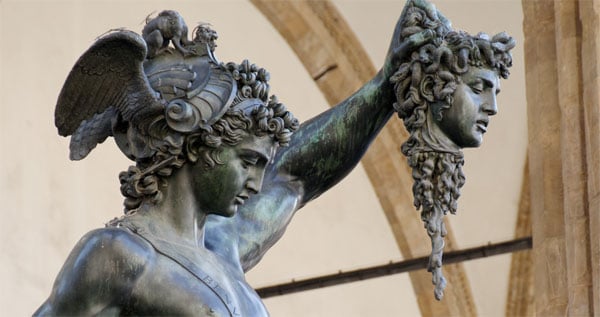
The source is the myth of demigods from other cultures the most obvious being the Greek and Roman ones which would have been quite familiar to this Greek speaking thoroughly Hellenized community.  There is really no precedence for this concept in Jewish Scripture, or culture.  Heroes created by generation of a god with a mortal include Ion by Apollo and Creusa, Romulus by Mars and Aemila, Asclepius by Apollo and Coronis, and Helen by Zeus and Leda.  Alexander, the Ptolemies, and the Caesars were said by some scholars to have been "virgin born". Alexander the Great, " journeyed to the Oasis of Amen in order that he might be recognized as the god’s son and thus become a legitimate and recognized king of Egypt. (https://en.m.wikipedia.org/wiki/Miraculous_births)


Now, one might point to the reference cited from Isaiah 7:14 in the passage as evidence that the writers were being serious and literal in this claim and that there is precedence or prophecy for this in the Jewish Scripture.
14 Therefore the Lord himself will give you[a] a sign: The virgin[b] will conceive and give birth to a son, and[c] will call him Immanuel.[d]  (Isaiah 7:14New International Version (NIV))b. Isaiah 7:14 Or young womand. Isaiah 7:14 Immanuel means God with us.
As footnoted in the New International Version above, the word translated as virgin is actually almah (עַלְמָה 5959  noun feminine young woman).  To say that all young women are virgins is like saying that all fruit are apples.  As well, the context of this verse from Isaiah chapter seven could hardly be seen as a foretelling of Jesus.

The story in chapter seven of Isaiah is about the threat of invasion of Judah by the kings of Ephraim and Aram who had formed an alliance.  God in this story tells the king of Judah, Ahaz, not to fear because Ephraim will come to ruin and will never invade. In sixty-five years they will be too shattered to even be a people. The sign given that this message comes from God is that by the time that a child conceived at the time of the message becomes a boy who, "knows enough to reject the wrong and choose the right, the land of the two kings you dread will be laid waste." (Isaiah 7:16)  This is a sign for a specific event, the destruction of the kingdoms of Ephraim and Aram, which was to begin by the time a child reaches the age of moral reason and be completed within sixty-five years.  There is no implication that the mother would be a virgin, or that the child was anything special other than a gauge of the passing of time and for having been given the name Immanuel, "God with us".  If the prophet intended to claim that this young woman was a virgin when she conceived the child, I would think that he would have included some further discussion on that point, or that someone in the generations of Jewish commentators before the book of Matthew would have taken notice of this.  Otherwise, we would also have to ask what became of the demigod produced in Isaiah's time and why he was never mentioned again.  Of course, I'm making the point that interpreting the description of the woman in Isaiah as being a virgin rather than just a young woman and taking the passage which refers to this in Matthew literally, is ridiculous.

However, some literalists, trying to invent what is not there, claim a, "second layer of prophesy", where Isaiah was not only foretelling the obvious immediate events specified, but, using the same words, was also predicting a second far off event as part of a secret code God has implanted for faithful modern readers in what he planned would be today's Bible.  Some of these same literalists who demand such a convoluted interpretation here also insist that passages like the one we are looking at from Matthew should be read, "plainly", without reference to context, literary style or device.  They instead view translations in authorized, God inspired and ordained, versions of the Bible to have been dictated directly by God to speak to the modern average reader.

If God meant to provide evidence of Jesus' literal Divine conception through signs and predictions in the Jewish Scriptures, one would think there would be more than this one dubious reference only drawn through a complicated interpretation forced on the text. The only foretelling or allusions that could be applied to Jesus in this chapter of Isaiah is the title Immanuel, and the promise in verse seventeen for Judah that, "The Lord will bring on you and on your people and on the house of your father a time unlike any since Ephraim broke away from Judah".

So why did the community of Mathew include this reference from Jewish Scripture in their allusion of Jesus being like one of the Greek and Roman demigods and describe it as a foretelling? Let's back up a moment and ask why they made this allusion to demigods in the first place.  I would imagine that they were saying that Jesus was so intimate with God that it was as if God conceived him like in these Gentile demigod myths.  Stressing Jesus' familiarity with God would have been important to this community since, with Jesus having no credentials or recognition from the Jewish Religious Authorities and Tradition, his authority and legitimacy and this community's credibility as a legitimate sect of Judaism, rested on Jesus' perceived intimacy and favor with God.


If bolstering their credibility among the wider Jewish community as a legitimate Jewish faction was a driver to the story, then reinforcing this pagan allusion with a reference from the Jewish Scriptures seems reasonable.  We have already looked at how using this reference from Isaiah as a foretelling that Jesus would have a literal Divine birth does not seem reasonable.  However, is this the aspect of their story that they were trying to reinforce with this reference?  The word in the original Greek in the Gospel that they use as their translation of the Hebrew describing the woman in the quote from Isaiah is, παρθένος, (Strong's Greek 3933) which although primarily used in the Greek to refer to a virgin, is also used historically to refer to either a marriageable maiden, or a young (married) woman.  So maybe the virgin interpretation of this word is not the aspect of the reference from Isaiah that they were meaning to apply and they were instead pointing to other parallels in their story with the one in Isaiah.  Perhaps the focus was on the name of the child, Immanuel, "God with us".  Might they be saying that, like the child in Isaiah, Jesus demonstrates that God is with us and this was foreshadowed by the prophet?  Or maybe this is a more general reference to special births as a portent and sign of God's future action.  Like the child born at the time of Isaiah's message to Ahaz is a marker of God's promise that Ahaz's enemies will be defeated and Judah will experience a special blessed period within the lifetime of this child, the birth of Jesus is the marker of God's promise of the Messianic Era that will come into play as Jesus comes into adulthood.

Thursday, 10 March 2016

The Deification of Jesus: Matthew Part 2

These series of posts are a non-literalist Christian's exploration of images of Jesus as Divine in Christianity and the New Testament. I am examining where these images came from and the reasons they were created. This is also an investigation of these image's meanings to those who created them and what meaning they may hold for myself and others today.

After exploring the Gospel of Mark, I began an investigation of the Gospel of Matthew with the last post. Again, I plan to investigate the images this community used to express who Jesus had become to them and to explore whether any of them portrayed Jesus as in any sense Divine, or more than human.

In the last post, I looked at the first chapter of Matthew which begins with, "the genealogy of Jesus the Messiah the son of David, the son of Abraham". I stated that, if the community of Matthew took the Divine conception portrayed later literally this would be an odd way to claim Jesus' lineage.   If Joseph is only Jesus', "adoptive", father, then why claim his legitimacy as based on descent from Abraham and David through Joseph?  And why make this claim so important that it is the opening of the Gospel?

18 This is how the birth of Jesus the Messiah came about[d]: His mother Mary was pledged to be married to Joseph, but before they came together, she was found to be pregnant through the Holy Spirit.19 Because Joseph her husband was faithful to the law, and yet[e] did not want to expose her to public disgrace, he had in mind to divorce her quietly.
So, the Gospel writers start off by naming Jesus as the Messiah, God's chosen king for Israel, and state that he meets the eligibility requirements due to his descent from Abraham and David through Joseph.  They make this their primary statement about Jesus and spend the first half of the chapter listing a detailed genealogy to back this claim.  Then half way through the chapter, the Gospel writers completely discredits this argument by having Joseph testify that he is not Jesus' father.  As I explored in the last post, there is no precedent in Jewish Scripture for an "adopted" son claiming his adoptive father's lineage.  In fact, there is so little evidence of adoption, taking another's child as one's own, in the Scriptures that it has been doubted whether this was practiced at all. Even, Ishmael, Abraham's first son by Hagar, his wife Sarai's Egyptian handmaiden, is denied his birthright and heritage because he is not also the child of Sarai.
Joseph's testimony not only shatters Jesus' eligibility as Messiah, but also to have any legitimate voice in the Jewish community.  It brands Jesus as a "Mamzer". As Bruce Chilton, in his Book, "Rabbi Jesus", explains, this was a caste in Jewish society of Israelites of suspect parentage, born of a prohibited sexual union such as incest or with a non-Israelite. Also called a shetuqi or "silenced one" in the Mishnah at a later period, one without a voice in the public congregations of Israel.
"No one born of a forbidden marriage" (footnote - Or one of illegitimate birth) "nor any of his descendants may enter the assembly of the LORD,"(Deuteronomy 23:3 NIV The Holy Bible)
One view that could be taken on this would be that it speaks to the Gospel's honest and unbiased reporting of the facts, even those that undermine the Gospel's contention. This argument for the credibility of the Gospels has been made around the story of the two Marys being the first to report Jesus' resurrection. Since women were not viewed as credible witnesses in Jewish society, this argument contends that they would not have been given this role if the Gospel was not unbiased in its reporting.

I think it much more likely that the belief in the community of Mathew and the wider Jewish community that Joseph was not Jesus' father and that Jesus did not have a legitimate claim as the son of any Jewish father was strong enough that the writers felt compelled to address it. This belief must have been prevalent enough and enough of a stumbling block that it required the writers to give a reason why this did not completely discredit Jesus and his teaching.  Jesus' parentage as a contemporary issue might also be suggested by the fact that the Gospel of Mark, believed to be written earlier, avoids Jesus' parentage and his life before being baptized by John completely.

 
Another perspective which may be helpful when looking at this apparent contradiction between Jesus' eligibility resting on his descent through Joseph and the testimony of Joseph that Jesus is not his child, is the understanding that the Gospel is a compilation of a number of early Christian writings by various authors assembled by a Christian community between 80 and 90 AD into one book, most likely by a, "decision of committee".   There are three main sources of material, the Gospel of Mark, the collection of sayings known as the Q source, and material unique to his own community, called "Special Matthew", or the M source. (https://en.m.wikipedia.org/wiki/Gospel_of_Matthew)

During University, I had the privilege of having Dr. Herbert W. Basser, a Jewish theologian and scholar of religion, as a Professor for one of my two religion electives.  A friend of mine recently had him as a Professor for New Testament studies while he was finishing his book, The Gospel of Matthew and Judaic Traditions: A relevance based commentary, I asked her how Dr. Basser would address this contradiction in Matthew.  Her reply was that Dr. Basser would point out that the book was a collection of early Christian writers from various authors, "assembled by committee", and that the genealogy at the beginning of our present form of the book is believed to be a later addition.  He would also assert that the Jewish mindset of this time would not have seen any problematic contradiction here, but would recognize the parentage story as myth and metaphor similar to what is found in other rabbinic writings of the time.

Next post, I will look at the story of the Divine inception in Matthew, the sources for this metaphor from pagan mythology, and the metaphorical meaning it may have held for this community.

Wednesday, 2 March 2016

The Deification of Jesus - Part 5

These series of posts are a non-literalist Christian's exploration of images of Jesus as Divine in Christianity and the New Testament. I am examining where these images came from and the reasons they were created. I would also like to explore their meanings to those who created them and what meaning they may hold for myself and others today.

In the first installment, I looked at the image of Jesus as one with God in the Trinity Doctrine popular in Christianity. The argument was made that this doctrine was not original to the earliest traditions of Christianity or the Gospels of the New Testament, but evolved over time to meet the needs of the Christian community.

I also explored the idea that the deification of Jesus in general was not original to the earliest traditions and also developed over time. As part of this, I investigated the diversity of early Christian thought in writings not included in our New Testament. Many of these traditions did not view Jesus as Divine and criticized what are now common Christian beliefs, such as the virgin birth or the bodily resurrection, as naïve misunderstandings.
I began the investigation of images of Jesus in the New Testament with the oldest of the Synoptic Gospels, the book of Mark. Like the other Synoptic Gospels of Matthew and Luke, Jesus is portrayed as considering himself the messiah, the future king of the Jews of the Messianic Age, but not as Divine, or somehow equal to God. There are, however, descriptions of him able to access special favor with God, and as such God would perform miracles and mighty deeds at his request. There is also mention of special abilities due to his intimacy with God.

In the two previous posts I investigated the images the community of the Gospel of Mark used to express who Jesus had become to them and whether any of them portrayed Jesus as in any sense Divine, or more than human. I found four main titles/images for Jesus. Looking through the rest of the Gospel I find these images repeated and re-emphasized, but no new ones. So, I will just review these four images before moving to the next Gospel.


1.  Jesus as "Messiah"
The beginning of the good news about Jesus the Messiah, the Son of God. (Mark 1:1)
The opening verse of the book of Mark gives Jesus the title, "the Messiah". The word, "Messiah", means literally, "the anointed one". This title comes with a lot of baggage to the modern reader, but in Jewish Scripture the anointed one was a person who had been set apart or chosen by God for a special purpose such as to be king of the Jewish nation. Both Saul and David were anointed by the prophet Saul to announce that they had been chosen by God to be king. So the Markian community is not only calling him king, they are claiming that he is God's chosen king.


2.  Jesus as "Son of God"

Notice here that the title, "the Son of God", is a repetition or further clarification of the preceding title, "the Messiah".  The title, "the Son of God" has a similar meaning.  It is the title that God gives his chosen king of the people of Israel.  For example, King David reports God as having said that David's son Solomon, "...shall be my Son, and I will be his Father,". (1 Chronicles, chapter 22:10). Neither David, who was also given this name, or Solomon, were considered to be in any way more than human in the Jewish tradition.


3.  Jesus as "Son of Man"

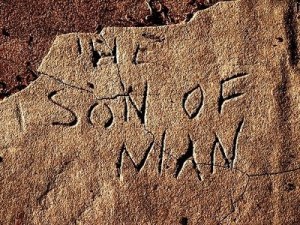
The favorite title the Jesus of Mark gives himself throughout the book is, "Son of Man", literally in Hebrew, "human being". Although this title is most often used by God in the Hebrew Scriptures to address one of his Prophets to emphasize the difference between God's divine stature and the Prophet's mortal humanity, Jesus was most likely referring to the description of the final king in Daniel's vision who is pictured as being, "like a son of man". This figure in Daniel's vision is given authority and everlasting dominion over the earth. Some have interpreted this figure as being angelic in nature and as such the Jesus of Mark is claiming to be more than human. However, closer examination of Daniel's vision suggests otherwise.
As the four preceding kings portrayed as beasts in the vision are explained within the vision as representing mortal human kings, there is no reason to believe that the fifth king is not also a human being represented in a figurative way. It was also noted that if the writer of Mark wanted to infer that Jesus was more than human with the use of this title, the title would have been, "The One Like a Son of Man", rather than just, The Son of Man".

Having Jesus claim this title is a reinforcement and expansion on the message of the two previous titles, Messiah and Son of God. Jesus is presented as not only God's chosen king of Israel, but is the king promised in Jewish apocalyptic literature to bring in the messianic age of a new intimacy between God and his people and will be given dominion over all the nations.


4.  Jesus as Miracle Worker

This image was not expressed with a title, but is a common theme in the Gospel to portray Jesus as being "accredited" or "backed" by God.  This would have been important to the Gospel writer since Jesus was a self appointed Rabbi and not ordained or formally recognized by Jewish Religious Authority and as such did not hold the right by tradition to give his own interpretations or teaching.

In the first chapter of Mark I looked at Jesus' miracles of healing and exorcism.  I discussed the fact that such acts were commonly attributed to great figures in the literature of the times both Jewish and Gentile. This was a  common literary device used to establish the importance and legitimacy of the figure.  As such, we can hardly consider this as a statement by the author of Mark on Jesus' Divinity.

In the next post I will begin this same process with the Gospel of Matthew of examining the images of the writer uses to express the significance of Jesus to his community and explore if any of these include a suggestion of Jesus being Divine, or more than human.

Saturday, 27 February 2016

The Deification of Jesus -Part 3

In the previous posts, I laid a long groundwork for approaching images of Jesus as, "more than human", or Divine.  In this and the following posts I will look at some of these specific images themselves.


In the Synoptic Gospels of Mark, Matthew, and Luke, Jesus is portrayed as considering himself the messiah, the future king of the Jews of the Messianic Age, but not as divine, or somehow equal to God.  There are, however, descriptions of him able to access special favour with God, and that God would perform miracles and mighty deeds at his request.  There is also mention of special abilities due to his intimacy with God.

Let's start with the Gospel of Mark.

MARK 1:
25 “Be quiet!” said Jesus sternly. “Come out of him!” 26 The impure spirit shook the man violently and came out of him with a shriek.
Jesus is shown as being able to cast out an impure spirit.  This is not uncommon to reports of actions attributed to other Rabbis of the time. 
32 That evening after sunset the people brought to Jesus all the sick and demon-possessed. 33 The whole town gathered at the door, 34 and Jesus healed many who had various diseases. He also drove out many demons, but he would not let the demons speak because they knew who he was.
Jesus heals a number of people of various ailments throughout the book of Mark, this being an example.  Again this is not uncommon in writings of the time about other Rabbis and the assumption is not that the individual themselves performed the healing, but their favour with God meant that God did the healing at their behest.
In fact, in the literature of the time, both Jewish and non-Jewish, is filled with healings and other miracles being attributed to important figures.  This seems to be a common literary device to affirm the importance and validity of the figure being discussed.  Pythagoras, the Greek mathematician and philosopher, was "documented" as having performed a series of miracles that rivals anything found in the Gospels.

MARK 2:
5 When Jesus saw their faith, he said to the paralyzed man, “Son, your sins are forgiven.” 6 Now some teachers of the law were sitting there, thinking to themselves, 7 “Why does this fellow talk like that? He’s blaspheming! Who can forgive sins but God alone?” 8 Immediately Jesus knew in his spirit that this was what they were thinking in their hearts, and he said to them, “Why are you thinking these things? 9 Which is easier: to say to this paralyzed man, ‘Your sins are forgiven,’ or to say, ‘Get up, take your mat and walk’? 10 But I want you to know that the Son of Man has authority on earth to forgive sins.”
When Jesus tells the paralyzed man that his sins are forgiven, the teachers of the law respond that this is something only God can do.  They are pretty much asking Jesus if he thinks he is God.  Jesus here doesn't agree with them or claim Divinity.  He talks about the "Son of Man" having authority on earth to forgive sins, not God, or the Son of God, the "Son of Man".  What is somewhat confusing here and throughout the Gospels is that he always refers to this, "Son of Man", in the third person.  Is he talking about himself, or someone else?  Given the context, it would seem that he is talking about himself. 

Question: "Why did you put that man in handcuffs?"  Answer: "Because the police officer is given the authority to do that to people he arrests in this country."  I don't think if someone answered a question in that manner that you would doubt that they were talking about themselves.

So, who is this, "Son of Man", and is he Divine?  
The Hebrew expression "son of man" (בן–אדם, ben-'adam) appears 107 times in the Hebrew Bible, the majority (93 times) in the Book of Ezekiel.[1] It is used in three main ways: as a form of address (Ezekiel); to contrast the lowly status of humanity against the permanence and exulted dignity of God and the angels (Book of Numbers 23:19,Psalm 8:4); and as a future eschatological figure whose coming will signal the end of history and the time of God's judgement (Daniel 8:17).[2  ]https://en.m.wikipedia.org/wiki/Son_of_man#Old_Testament

He said to me, “Son of man, stand up on your feet and I will speak to you.” Ezekiel 2:1
The book of Ezekiel has God calling the Prophet Ezekiel, "son of man", ninety-three times.  The Prophet Ezekiel was sent by God to speak to a people of Israel who God states to him would not be willing to listen because they were not willing to listen to God.  So it would seem that Jesus' use of this title was primarily to "dis" those calling his words blasphemous, inferring that he spoke God's word and that the teachers of the law were not listening to him because they were not willing to listen to God.  However, was it also meant to answer the question about whether only God could forgive sins? 

Ezekiel was not considered Divine  If this is the reference Jesus is making by calling himself the, "Son of Man", then perhaps he was claiming that special prophets called by God have the authority to forgive sins and that he fits this category.

The Prophet Ezekiel was not portrayed as having the authority to forgive sins in the Tanakh.  In Ezekiel 33, however, God does tell the Prophet that those who turn away from their sin and do what is just and right will live and not die and that, "16 None of the sins that person has committed will be remembered against them."  Might Jesus be referring to this?  Could he be saying that because of his faith in Jesus' words and recognition that they, "came from God", that the paralyzed man had turned from sin to do what was just and right, and this meant that his sin was forgiven?

The other place in the Tanakh where the title, "Son of Man", was used was in the visions of Daniel, in the book of that name right after the book of Ezekiel. 
13 “In my vision at night I looked, and there before me was one like a son of man,[a]coming with the clouds of heaven. He approached the Ancient of Days and was led into his presence. 14 He was given authority, glory and sovereign power; all nations and peoples of every language worshiped him. His dominion is an everlasting dominion that will not pass away, and his kingdom is one that will never be destroyed. (Daniel 7:13-14)
 17 As he came near the place where I was standing, I was terrified and fell prostrate.“Son of man,”[b] he said to me, “understand that the vision concerns the time of the end.” (Daniel 8:17)
The, "Son of Man", of Daniel is more likely the image Jesus was referencing,  This figure, described as being, "like a son of man", is given, "authority, glory and sovereign power", as well as, "everlasting dominion".  It would make sense for Jesus to claim that this authority included the forgiveness of sins on earth. 

This Son of Man is obviously not God, but is he portrayed as, "more than human"?  The figure in Daniel's vision is described as, "like", a son of man, literally in the Hebrew, "like", a, "human being".  This might suggest that the figure, rather than being human, is angelic, one of the Heavenly Host.  However, when looked at in the context of the vision and the interpretation of the images given in the vision, this appears not to be the case.

In Daniel's vision, he sees four beasts who are explained to represent four kings.  They are portrayed as various beasts to describe the different qualities of baseness of each; terrifying, crushing and devouring humanity, their victims.  These kings are given authority for a time to wreck havoc on mankind.  They are given authority to rule for a period of time until God strips them of it and gives authority and everlasting dominion to the one like a human being.  It would make sense that, just like the kings are human people envisioned as figures in the form of terrible beasts to describe their base natures, that the fifth king being foretold is also human and his representation, in contrast to the preceding kings, is being described as truly human in nature. It does not make sense to me that if the images of the first four kings are figurative representations of human people, that we would interpret the image of the fifth king as a literal description of a non-human being.

This is my take on the figure.  But, what is important here is how the community and author of Mark perceived him and what they were trying to say about their perception of Jesus' own identity by using this title.  What that view was I believe is telling in the fact that they had him use the title, "The Human Being", and not, "The One Like A Human Being".

The Deification of Jesus - Part 4

In the previous posts, I laid a long groundwork for approaching images of Jesus as, "more than human", or "Divine".  In this and the following posts I will look at some of these specific images themselves.

In the last post I began with images of Jesus in the Gospel of Mark.  In the first chapter of Mark we looked at Jesus' miracles of healing and exorcism.  I discussed the fact that such acts were commonly attributed to great figures in the literature of the times both Jewish and Gentile. This was a  common literary device used to establish the importance and legitimacy of the figure.  As such, we can hardly consider this as a statement by the author of Mark on Jesus' Divinity.

In the second chapter of Mark, we looked at the story of Jesus telling a paralyzed man that his sins were forgiven.  The teachers of the law protest that only God can forgive sins.  Jesus does not respond that his authority to forgive sins comes from a claim of divinity.  Instead, he states that the, "Son of Man", literally in Hebrew, "human being", also has this authority on earth, claiming this title for himself.

Although this title is most often used by God in the Hebrew Scriptures to address one of his Prophets to emphasise the difference between God's divine stature and the Prophet's mortal humanity, Jesus was most likely referring to the description of the final king in Daniel's vision who is described as being" like a son of man" and who is given authority and dominion over the earth.  Some have interpreted this figure as being angelic in nature and as such that the Jesus of Mark is claiming here to be more than human.  However, closer examination of Daniel's vision suggests otherwise.

As the four preceding kings seen as beasts in the vision are explained within the vision as representing mortal human kings, there is no reason to believe that the fifth king is not also a human being represented in a figurative way.  It was also noted that if the writer of Mark wanted to infer that Jesus was more than human with the use of this title, the title would have been, "The One Like a Son of Man", rather than just, The Son of Man".

Let us to continue to explore the Gospel of Mark for images of Jesus that might suggest the author considered him to be, "more than man".

Mark Chapter 3:
11 Whenever the impure spirits saw him, they fell down before him and cried out, “You are the Son of God.” 12 But he gave them strict orders not to tell others about him.

We will put aside for the moment the whole question of whether Mark and his community affirmed the reality of sentient impure spirits or since they feature in much of the literature of the time, or if they are a metaphorical part of the story.  Instead we will focus on the title the writer has them give Jesus.  This is the same title that the writer gives Jesus in the opening verse of the first chapter:
The beginning of the good news about Jesus the Messiah, the Son of God. (Mark 1:1)
Notice here that the title, "the Son of God", is a repetition or further clarification of the preceding title, "the Messiah".  The title Messiah, means literally, "the anointed one". This title comes with a lot of baggage to the modern reader. What did it mean to this group? In Jewish Scripture the anointed one was a person who had been set apart or chosen by God for a special purpose such as to be king of the Jewish nation. Both Saul and David were anointed by the prophet Saul to announce that they had been chosen by God to be king.  So the Markian community is not only calling him king, they are claiming that he is God's chosen king. 

The title, "the Son of God" has a similar meaning.  It is the title that God gives his chosen king of the people of Israel.  For example, King David reports God as having said the following to him about David's son Solomon:
10: He shall build a house for my name. He shall be my Son, and I will be his Father, and I will establish his royal throne in Israel for ever.' (1 Chronicles, chapter 22:10)

The meaning of this title to the writer of Mark is quite different than that of a similar title used around the same time. 
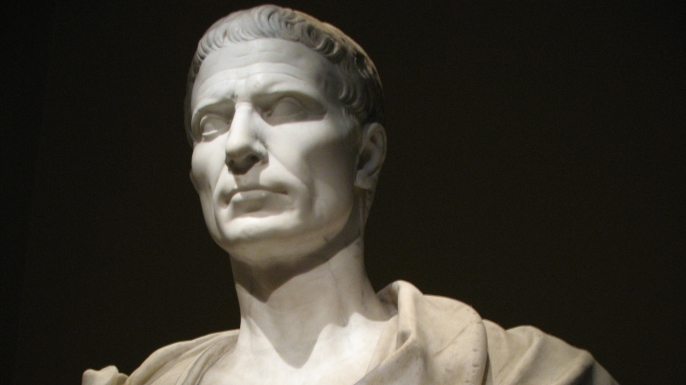
In 42 BC, Julius Caesar was formally deified as "the divine Julius" (divus Iulius) after his assassination. His adopted son, Octavian (better known as Augustus, a title given to him 15 years later, in 27 BC) thus became known as divi Iuli filius (son of the divine Julius) or simply divi filius (son of the god).[24] As a daring and unprecedented move, Augustus used this title to advance his political position in the Second Triumvirate, finally overcoming all rivals for power within the Roman state.[24][25]  https://en.m.wikipedia.org/wiki/Son_of_God

As we saw above, this was not the meaning of the title, "Son of God", the author of Mark used for Jesus.  However it is understandable if later Gentile Christians not familiar with the Jewish tradition may have got them confused.